13 August 1961 – 65 years
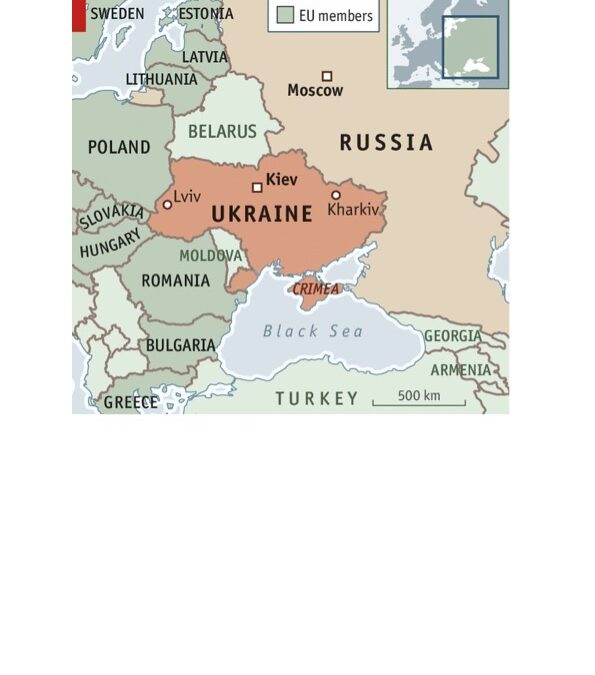
65 years after the Berlin Wall was built, memories of the reality of the GDR – with its border defences turned inwards – seem to have reached retirement age. – In any case, forgetfulness seems to be spreading, not only amongst residents of the former GDR and their experiences of the Wall, barbed wire, the death strip, watchtowers, orders to shoot and so-called ‘automatic firing devices’, which were nothing more than anti-personnel fragmentation mines: Facing inwards – against so-called ‘escape from the republic’ by those wishing to leave, as the (very German) written orders and documented resolutions show. This is particularly true of the public service media, which did not exist in the eastern part of Germany and would not exist in the eastern part of a divided Ukraine.
It is remarkable that those nostalgic for the GDR not only pander to the aggressor, Russia, but also regard the partition of Ukraine as an attractive solution. – They may be suppressing their own experiences, or those of their parents, of the Wall, barbed wire, the death strip, watchtowers, shoot-to-kill orders and so-called automatic firing devices – all deployed against the so-called ‘flight from the republic’ by those wishing to leave! Putin, the former KGB colonel in Dresden, has not forgotten them and keeps them close at hand in a drawer.
A reminder
In 1945, the Allied victorious powers of the Second World War divided Germany into four occupation zones, although the separation between the western occupation zones of the USA, the UK and France was soon lifted. The name ‘German-German border’ became official in 1949 with the founding of the two German states (FRG, GDR). However, it never really caught on. In common parlance, people continued to refer to it as the ‘zone border’ or the ‘intra-German border’. https://en.wikipedia.org/wiki/Soviet_occupation_zone_in_Germany
The separation was cemented by the ‘Ordinance on Measures at the Demarcation Line between the German Democratic Republic and the Western Occupation Zones’ of 26 May 1952. From a bureaucratic perspective, this process was regulated by the Order on the ‘Revision of Measures at the Demarcation Line between the GDR and West Germany’.
A border was established with a 10-metre-wide control strip, secured at its western edge by a barbed-wire fence. The security strip was 500 metres wide. The restricted zone on the GDR side was initially set at 5 kilometres. The residents of this restricted zone were registered. Visitors required a pass, which had to be applied for a week in advance, to enter the restricted zone. Through ‘Operation Ungeziefer’ in 1952 and ‘Operation Kornblume or Consolidation’ in 1961, ‘untrustworthy’ citizens were forcibly resettled to the hinterland.
The aim pursued by the GDR leadership in reinforcing this demarcation line was to prevent a mass exodus to the West. Following the failure of the Stalin Note and the neutralisation of the whole of Germany, the border was presented to the population as an ‘anti-fascist bulwark’ intended to ‘protect the GDR from aggression by the class enemy’. As well as preventing mass flight, it also served as an ‘Iron Curtain’ between two different social orders, as the initial policy of appeasement pursued by the three Western victorious powers evolved into a form of safeguard against the USSR. The bloody suppression of the workers’ uprising of 17 June 1953 and the bloody suppression of the uprising in Hungary from 23 October 1956 to 4 November 1956 – both carried out by Russian tanks – demonstrated the incompatibility of Western democracies with the Soviet colonial system of the COMECON.
From 1961 onwards, the border was partially mined and fitted with electrified fences. Another inhumane feature was the installation (1970–1983) of automatic firing devices on the GDR side (the ‘death strip’). 30,000 border guards were stationed in barracks near the border with the aim of ‘arresting or eliminating’ any border violator. https://en.wikipedia.org/wiki/Schießbefehl
From 1971 onwards, these restricted zones were partially reduced in size. Along the border, which was approximately 1,400 kilometres long, there were around 900 km of border fence, plus approximately 450 km of automatic firing devices, around 250 km of Type 66 minefields, approximately 600 km of vehicle-barrier ditches and around 1,000 observation towers. Citizens who had succeeded in fleeing were discredited as ‘refugees from the Republic’; their families left behind were subjected to repression. https://en.wikipedia.org/wiki/SM-70
From Berlin to Kyiv
The only thing people remember about Kennedy’s 1963 speech in Berlin is that he called himself a “Berliner.” The rest has been forgotten. On June 26, 1963, he delivered his speech in Berlin in front of the Brandenburg Gate—a speech that, we can be sure, he would deliver today in the same spirit on the Maidan in Kyiv:
” …. What is true of this city is true of Germany–real, lasting peace in Europe can never be assured as long as one German out of four is denied the elementary right of free men, and that is to make a free choice. In 18 years of peace and good faith, this generation of Germans has earned the right to be free, including the right to unite their families and their nation in lasting peace, with good will to all people. You live in a defended island of freedom, but your life is part of the main. So let me ask you as I close, to lift your eyes beyond the dangers of today, to the hopes of tomorrow, beyond the freedom merely of this city of Berlin, or your country of Germany, to the advance of freedom everywhere, beyond the wall to the day of peace with justice, beyond yourselves and ourselves to all mankind.
Freedom is indivisible, and when one man is enslaved, all are not free. When all are free, then we can look forward to that day when this city will be joined as one and this country and this great Continent of Europe in a peaceful and hopeful globe. When that day finally comes, as it will, the people of West Berlin can take sober satisfaction in the fact that they were in the front lines for almost two decades.
All free men, wherever they may live, are citizens of Berlin, and, therefore, as a free man, I take pride in the words “Ich bin ein Berliner.” https://www.jfklibrary.org/archives/other-resources/john-f-kennedy-speeches/berlin-w-germany-rudolph-wilde-platz-19630626
In 1983, following pressure exerted by the Federal Republic’s billion-mark loan to the bankrupt GDR, the automatic firing devices were dismantled, the mines were detonated and replaced with dog-patrol systems. With the ‘fall of the Wall’ on 9 November 1989, the border became passable in numerous places. It was not until German Unity Day on 3 October that the Wall finally came to an end. In Hötensleben in Saxony-Anhalt, a small section of the border defences has been preserved as a memorial TH (Source: Hötensleben et al.)