Putin’s Recipes for treaties
One has often questioned the binding character of the Budapest memorandum. It was comfortable to pretend a lesser obligation, given it had not been ratified. – The Memorandum enshrined in the framework of the Helsinki Agreements, was registered as treaty at the UN. In the text in Ukrainian, in Russian and in English is stipulated: “Coming into force by signature”. https://europa-information.eu/en/paper-is-alive-the-budapest-memorandum-of-1994/
Between the Budapest memorandum of 1994 and Russia’s war against Ukraine since 2014, Putin showed his cooking recipes for signed and ratified treaties. Whoever plans to negotiate, to sign and to ratify any agreement or treaty with Putin in place, should know his pattern with treaties. – The numerous repetitions of negotiations, signatures, and ratifications lead normal people to a learning process of confidence and trusting in the intentions of the opposite party.
Looking back to the political and economic situation of Russia after the implosion of the Soviet Union, leads us to the bitter acknowledgment, that Putin and his KGB/FSB network simply needed time, which they filled by calming treaties.
When President Zelensky, in a recent interview about the perspectives of peace, pointed out, that he knows Russia far better than Putin knows Ukraine, he didn’t mention Putin’s visit to Kyiv in 2003, already then President of the Russian Federation.
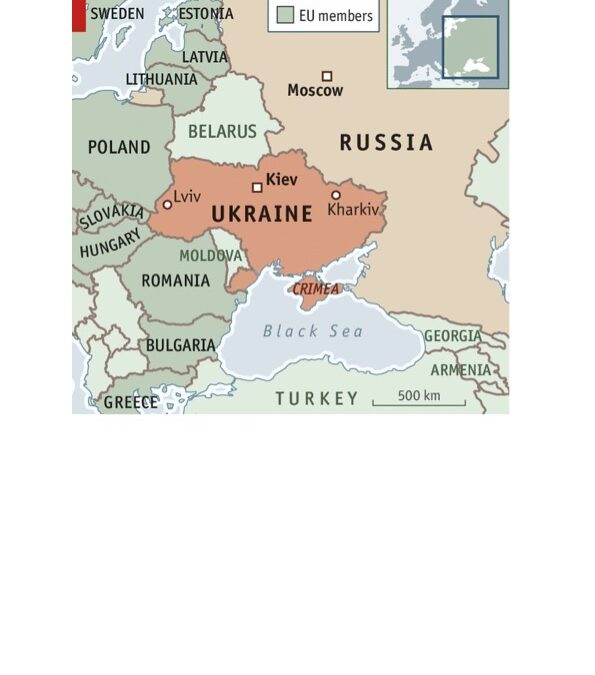
Indeed Putin went to Kyiv to sign the Treaty on the Russian–Ukrainian border on the 28th January 2003. This is a bilateral international treaty between the Russian Federation and Ukraine, which defined and fixed the land border line of the two countries in international law.
Terms of the Treaty
The Treaty defines the “Russia–Ukraine state border” as the line and vertical surface passing along this line, separating the state territories (land, waters, subsoil, and airspace) of the Contracting Parties from the point of junction of the state borders of the Russian Federation, Ukraine, and the Republic of Belarus to the point located on the shore of the Taganrog Gulf.[1]
The border follows the path as specified in the Description of the Passage of the State Border between the Russian Federation and Ukraine. The description and maps of the state border attached to the UN-registered Treaty are its integral part.
As a UN-registered treaty it is registered in Ukrainian, in Russian, in English and in French, just to make sure, that whoever wants to ignore it, can do so in her/his own language. https://treaties.un.org/Pages/showDetails.aspx?objid=08000002803fe18a
Signing and ratification
On January 28, 2003, during the visit of the President of the Russian Federation Vladimir Putin to Kyiv, the Treaty on the state border between the two countries was signed, which fixed its land part.
Ukraine ratified the Treaty on April 20, 2004, and the Russian Federation on April 22.
The Treaty entered into force on the date of the exchange of instruments of ratification on April 23, 2004.
During the period between the signing and ratification of the Treaty, Russia provoked the conflict about the Russian construction of a dam from the Russian Taman Peninsula to the Ukrainian Tuzla Island in the Kerch Strait. At that time analysts believed the conflict aimed to pressure Ukraine regarding the delimitation of the border in the Kerch Strait and the Sea of Azov.
As we know today, the construction was a “test” on the way to construction of the Kerch Bridge after the occupation of the Ukrainian Crimea. Indeed, Putin took up the project of Hitler in his order of 07th March 1943 for a road and a railroad bridge. https://journals.openedition.org/mappemonde/7304
Cooperation in the Use of the Sea of Azov and the Kerch Strait
In the research for a lasting and peaceful coexistence the Treaty Between the Russian Federation and Ukraine on Cooperation in the Use of the Sea of Azov and the Kerch Strait on December 24, 2003, completed the legal formalization of the border line on land. (Agreement between Ukraine and the Russian Federation Cooperation in the use of the Sea of Azov and the Kerch Strait )
This additional treaty between the Russian Federation and Ukraine is an agreement on acces to sea and fisheries and entered into force on 23 April 2004. It was signed on 24 December 2003 by President of Ukraine Leonid Kuchma and again by President of Russia Vladimir Putin and ratified by both parliaments in April 2004.
On July 29, 2010, the Treaty on the demarcation of the Ukrainian–Russian state border entered into force, creating the legal basis for initiating the process of marking the Russia–Ukraine state border on the ground.
The problem of demarcating the land part of the Russia–Ukraine border remained a “frozen” issue in bilateral relations for many years, because for many years, the Russian Federation obstructed this process. The (Ukrainian/Russian) Agreement between Ukraine and the Russian Federation on the demarcation of the Ukrainian-Russian state border had the following steps:
- Date of signing: 17.05.2010
- Date of ratification by Ukraine: 08.07.2010;
- Date of ratification by Russia: 28.07.2010
- Date of entry into force for Ukraine: 29.07.2010
At this time Dmitry Medvedev was President and Putin his Prime Minister.
Demarcation of the border
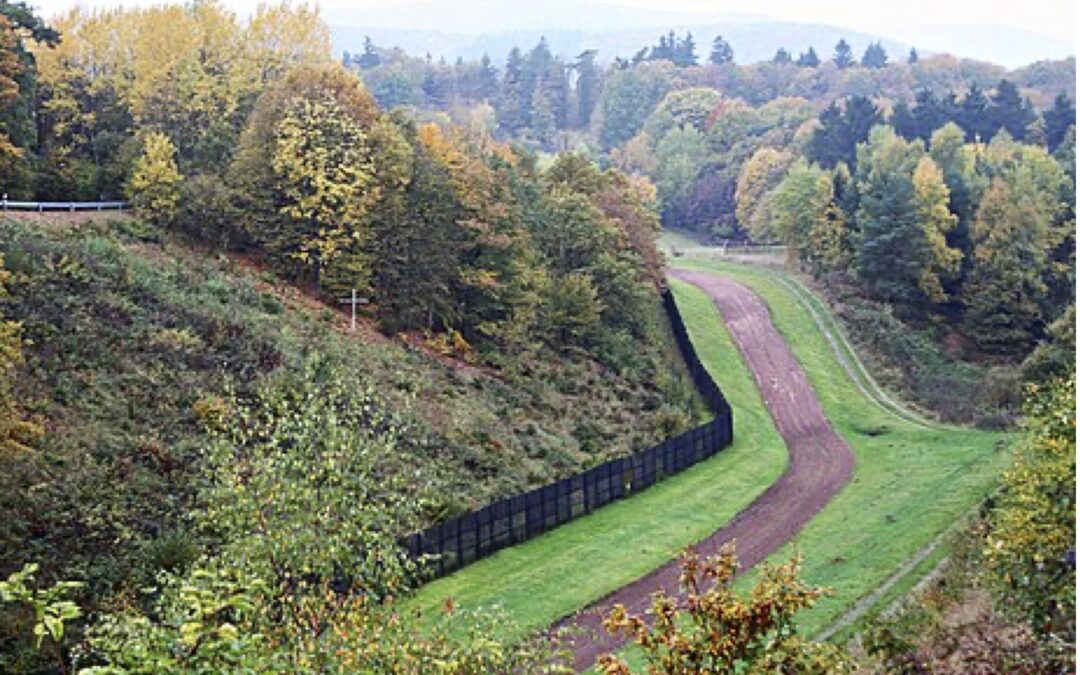
As no measures to demarcate the border were taken due to the resistance of the Russian Federation, the Ukrainian side decided to unilaterally carry out activities to mark the border on the ground. Direct demarcation of the border is carried out based on the Resolution of the Cabinet of Ministers of Ukraine of May 14, 2015, “On marking the Ukrainian–Russian state border on the ground”.
By beginning its armed aggression against Ukraine since 2014, Russia violated not only step by step general and recognized fundamental norms and principles of international law, but also the bilateral and multilateral treaties and agreements, including the Treaty on the Ukraine-Russia state border, which had been signed and ratified by both parties.
As shown here, while on the Ukrainian side the representatives have changed, following the democratic cycles and procedures, on the side of the Russian federation one actor is permanent since 2003: Putin.
Any future truce or even more future peace treaty must be measured in the light of these three Ukrainian-Russian, UN-registered treaties: Putin has signed and the Russian Parliament has ratified all treaties.
One cannot deny that one pattern is common: the NON-Respect by Putin of all these treaties which are built on each other. (TH)

[1] Таганрозька затока – is the northeastern arm of the Sea of Azov